
Understanding Digital Health Literacy and Related Training Needs of Adult Clients Aged 45+ Years to Co-develop and Prototype Tailored Training Solutions
Enhancing Cognition Promoting Independence
PHD STUDENT
Rachel Sinanan
rsinanan@students.federation.edu.au
https://www.linkedin.com/in/rachelsinanan/
CHIEF INVESTIGATOR
A/Prof George Van Doorn
INDUSTRY PARTNERS
Flourish Australia, Peter Neilson
City of Ballarat, Subha Simpson
Australia is undergoing a rapid transformation towards a more digitally enabled health system. Technologies such as telehealth, electronic health records, electronic prescriptions, mobile health applications and emerging artificial intelligence are increasingly shaping how health information and services are accessed and delivered.
This transformation raises an important question. As healthcare becomes increasingly digital, what enables people to participate meaningfully in it? The answer is unlikely to be digital access or technical competence alone. The ability to find, understand, evaluate and appropriately use health information and services online is becoming an important component of health and wellbeing. Yet, digital health literacy is often approached primarily as a matter of technical competence, whether people can access a website, use an application, or navigate a digital health service. This skills-focused perspective may not fully capture the capabilities required to make informed and meaningful decisions in increasingly complex digital health environments.
Adults in mid-to-later life may be particularly affected by these changes. From the age of 45 onwards, people increasingly encounter changing health needs while also navigating evolving digital technologies and healthcare systems. However, digital health literacy is unlikely to be determined by digital skills alone. Individuals’ capacity to engage with digital health information may also be shaped by interacting biological, psychological, social and digital influences, including functional capabilities, confidence and anxiety, social support, access and prior experience, and the characteristics of the digital environment itself.
This PhD research therefore takes a biopsychosocial-digital perspective (Figure 1) to examine digital health literacy among adults aged 45 years and over. Extending traditional biopsychosocial approaches by explicitly incorporating the digital environment, the research conceptualises digital health literacy as an interactive capability shaped by the person and their social and digital context, rather than simply a collection of technical skills.
A particular focus of the research is the role of critical appraisal and evaluative thinking. In an environment characterised by rapidly expanding health information, misinformation, commercial context, artificial intelligence, and increasingly complex digital health systems, being able to access information is not necessarily sufficient. Individuals must also be able to judge its credibility, interpret its relevance, distinguish trustworthy information from potentially misleading content, and determine how, or whether, it should inform their health decisions. The research therefore investigates whether critical thinking represents a distinguishing capability of digital health literacy, beyond more basic digital competence.
Following the Medical Research Council and National Institute for Health and Care Research framework for complex interventions (Figure 2), this research includes synthesising existing evidence on digital health literacy interventions, investigating the biological, psychological, social and digital factors associated with digital health literacy, and identifying the capabilities and support needs of adults aged 45 years and over. Findings will the inform the co-development and prototyping of person-centred, evidence-informed training solutions designed to support meaningful and equitable participation in digital health care.
Ultimately, the research aims to move the conversation beyond the question of “Can people use digital technology?” towards a more important question of “What enables people to engage critically, confidently, and meaningfully with digital health?” By developing a biopsychosocial-digital understanding of digital health literacy and examining the potential role of critical appraisal as a distinguishing capability, this research seeks to contribute both a stronger theoretical foundation for understanding digital health literacy in mid-to-later life and a practical basis for developing more responsive and sustainable approaches to digital health inclusion.
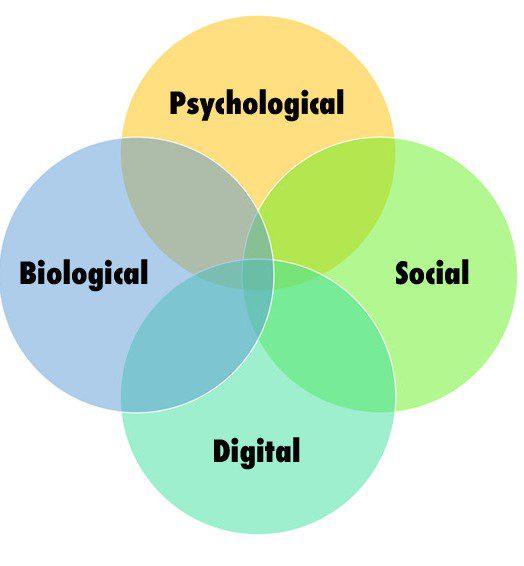
Figure 1. Biopsychsocial-digital Model
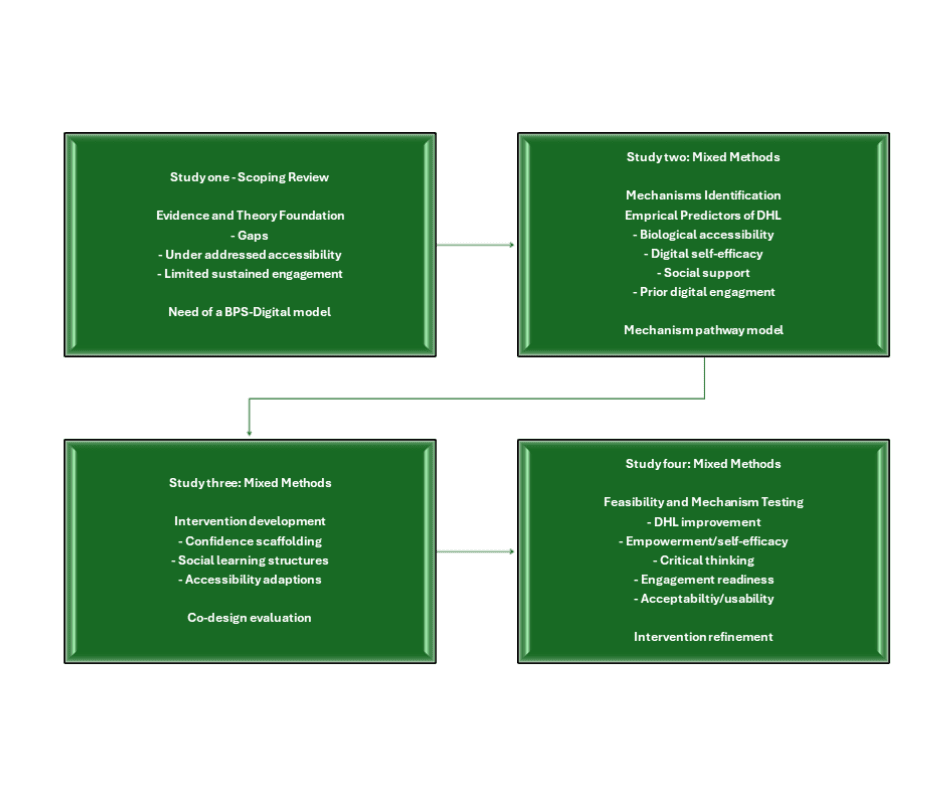
Figure 2. Medical Research Council and National Institute for Health and Care Research Framework
Publications and Media
Press Releases
MAY 2026 New study to support older Australians navigate digital healthcare, Federation University
JUNE 2026 ‘Health gap’: booking a doctor’s appointment is leaving many behind, The Senior
Interviews
MAY 2026 ABC Radio Shepparton
MAY 2026 ABC Radio Great Southern
MAY 2026 3BA Ballarat
Academic Milestones
Confirmation of Candidature
MARCH 2026 Understanding Digital Health Literacy and Related Training Needs of Adults Aged 45+ Years to Co-develop and Prototype Tailored Training Solutions
Conferences and Presentations
Conferences
UPCOMING MAY 2027 Digital Health Festival 2027, 19-20 May, Melbourne
Presentations
FEBRUARY 2026 ITTC in Optimal Ageing Monthly Webinar Series, Understanding Digital Health Literacy and Related Training Needs of Adults Aged 45+ Years to Co-develop and Prototype Tailored Training Solutions